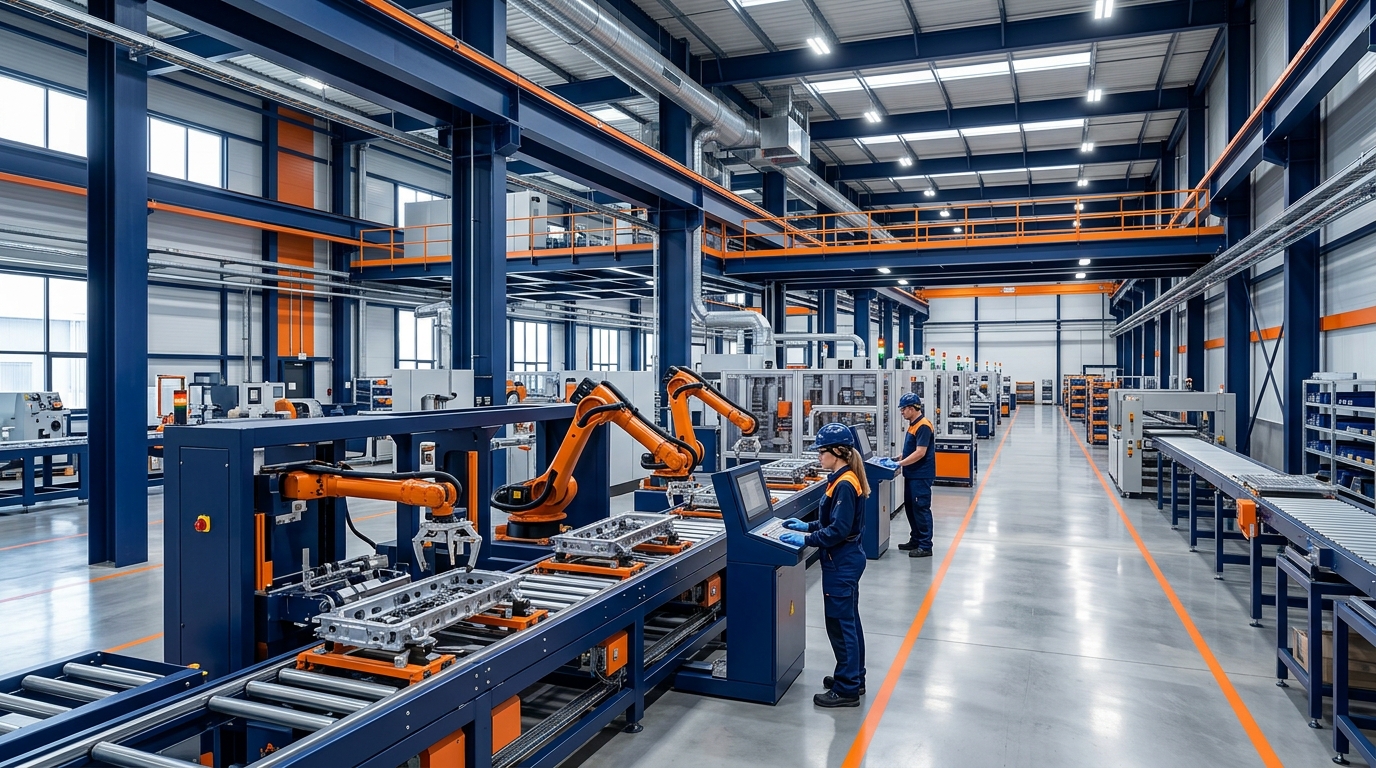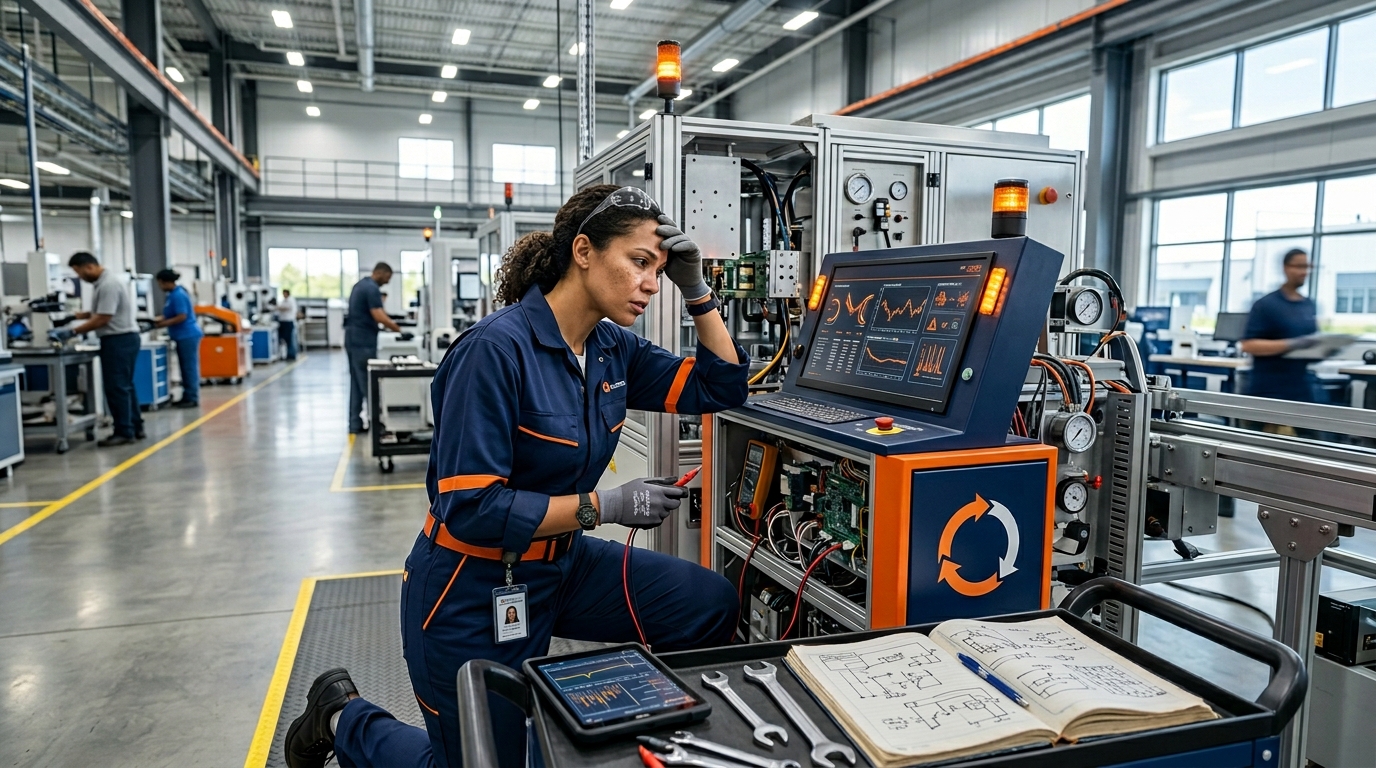
A construction project ends with a handover. An operation lasts for decades. Between the two, responsibility for the building’s performance often remains unclear, and that is where a large share of future costs is decided.
The gap between handover and operation
On delivery day, the construction company moves on to another site. The owner hands the keys to an operations team, internal or external, which discovers the building at the same time as its first defects. The useful information exists, but it arrives in bulk: paper binders, hard-to-use digital files, manuals scattered across several suppliers.
The result: the first breakdowns are handled without any history, nobody knows which equipment is still under warranty, and the maintenance plan starts late, if at all. Meanwhile, the operating cost, which weighs durably on the owner’s budget, builds up without being managed.
What the handover must give to maintenance
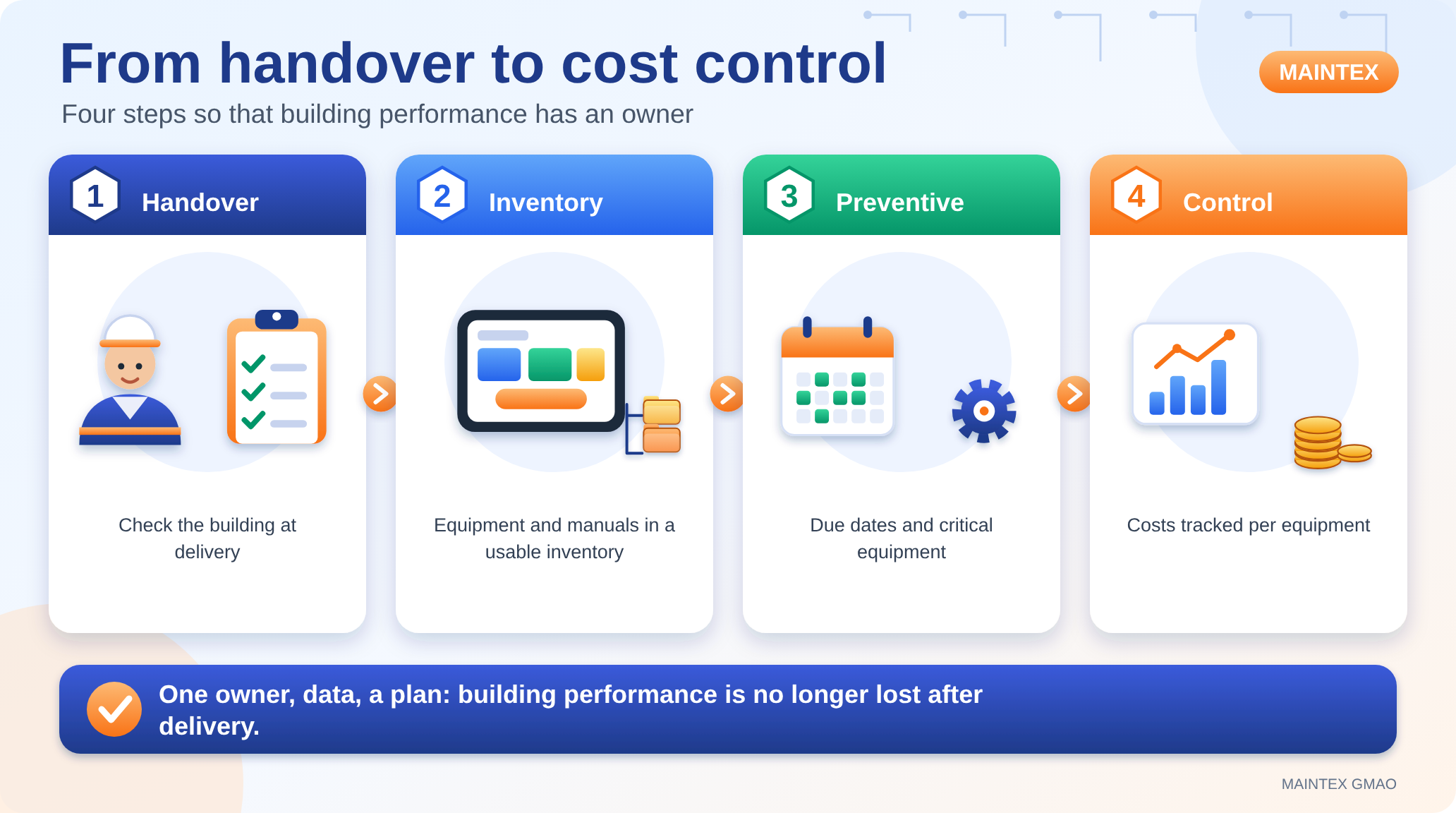
The handover should not only check that the building is compliant. It should also give the operator what is needed to keep it running. Five elements make the difference:
- An equipment inventory: description, make, model, serial number, location in the building.
- The manufacturer’s manuals and maintenance requirements, equipment by equipment.
- Commissioning dates and warranty periods, so as not to pay for what is still covered.
- The reference settings recorded at commissioning, which serve as a point of comparison in case of drift.
- The contacts of installers and suppliers, with their response-time commitments.
A preventive plan built from the first month
Waiting for breakdowns to organise upkeep means discovering maintenance needs at the most expensive moment. It is more effective to turn the manufacturer’s requirements into a preventive maintenance plan from delivery, with clear due dates and an owner for each task.
Start with the critical equipment, the kind whose shutdown halts activity or creates a risk: lifts, cooling production, air handling, backup power supplies, pumps. For each one, ask two questions: what happens if it stops, and who steps in? The rest of the plan is then built in priority levels.
Managing costs with data
You cannot manage an operating cost that you cannot tie to an equipment item or a zone. As soon as every intervention is recorded with its equipment, its duration and its cost, three readings become possible: which equipment costs the most, which breaks down repeatedly, and from when it becomes cheaper to replace than to repair. This is the life-cycle cost principle, applied every day.
☐ Handed-over equipment inventory checked on site
☐ Manufacturer manuals and maintenance plans filed by equipment
☐ Commissioning dates and warranty end dates entered
☐ Reference setting values recorded and logged
☐ Critical equipment identified with its owner
☐ Installer contacts and response times recorded
☐ First preventive maintenance plan approved before move-in
☐ Tracking tool chosen and populated before the first intervention
The role of a CMMS from delivery
A CMMS gives all this information a single landing point. Fed from the handover, it avoids having to reconstruct the history later. With a mobile app that works offline, technicians record and consult information where it is, including in technical rooms and basements where the network is poor. This is the logic of MAINTEX: a mobile-first CMMS, designed for construction companies and for building operators.

Find out how MAINTEX supports the commissioning of a building, from the inventory to the first preventive plan.