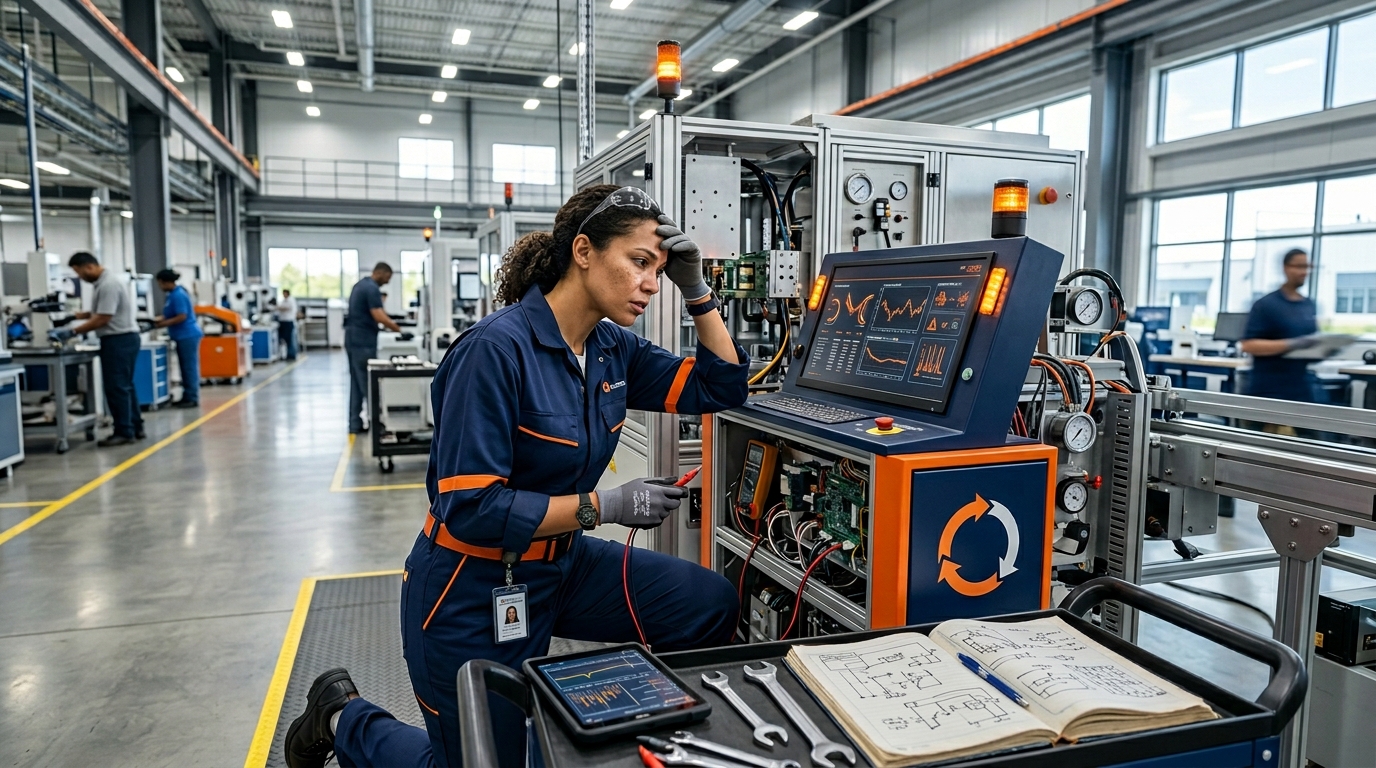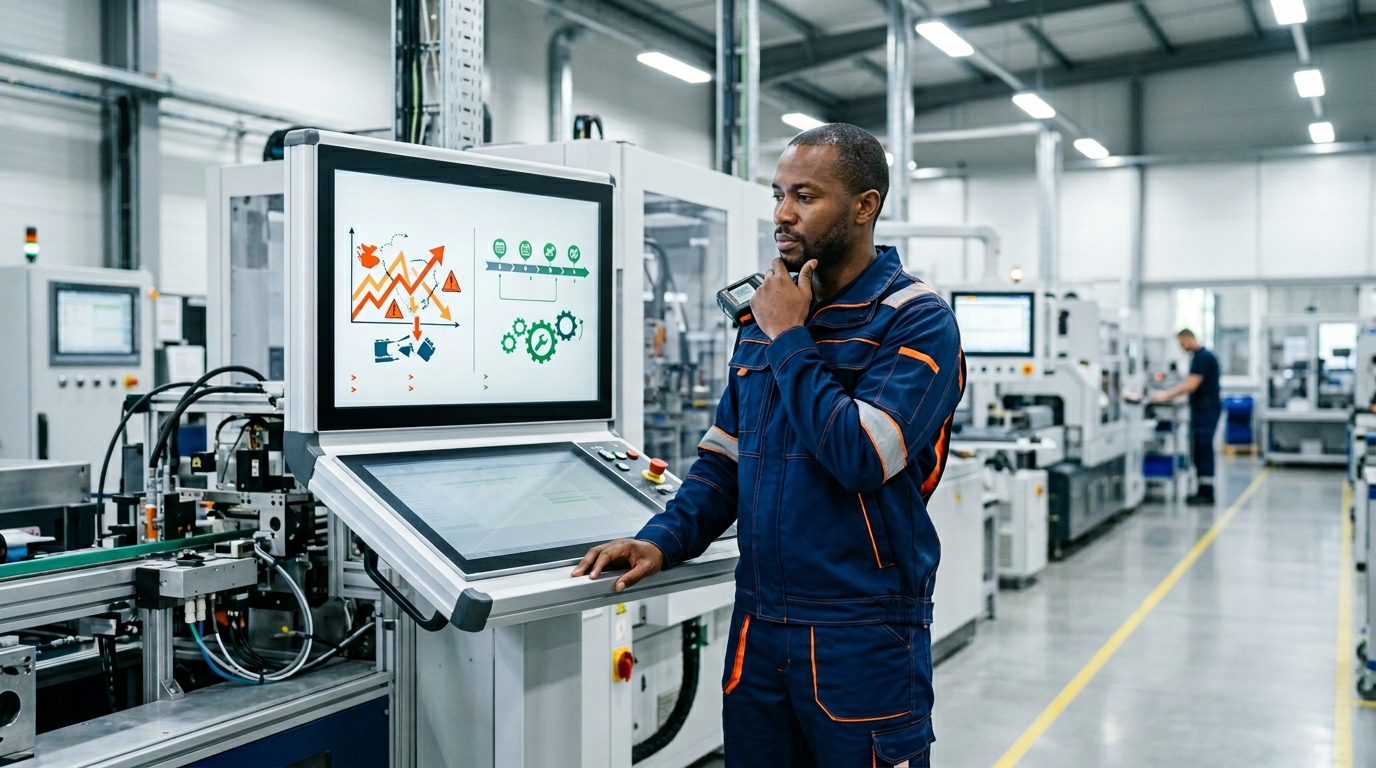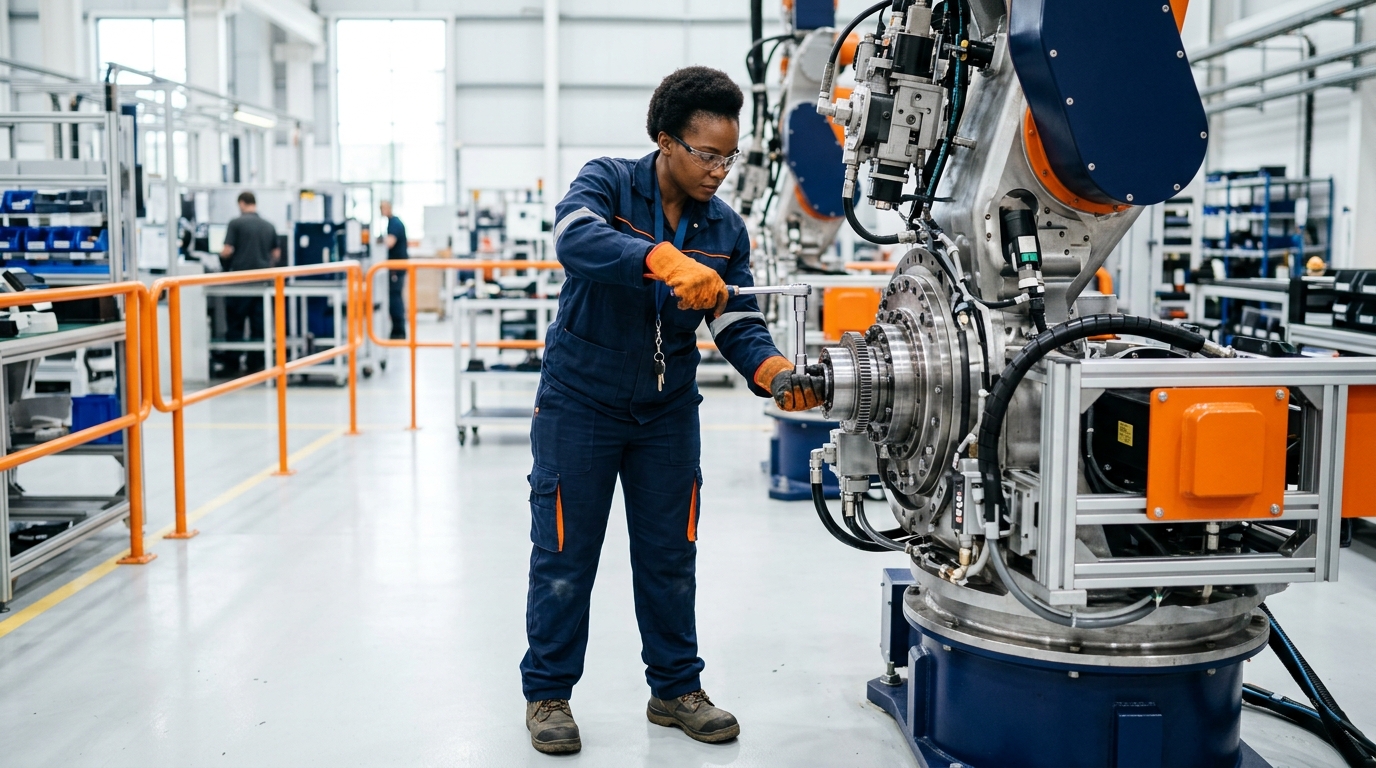
In industrial maintenance, acting fast is a necessity. But acting fast without correcting the real cause simply postpones the problem: the breakdown returns, MTBF degrades and teams lose confidence. Repairing isn’t enough : you must correct lastingly.
What is a corrective action?
It’s an intervention aimed at eliminating the root cause of a failure to prevent its recurrence. Not to be confused:
| Type of action | Objective |
|---|---|
| Repair (curative) | Quick restoration, often temporary |
| Corrective action | Lasting removal of the root cause |
| Preventive action | Anticipation of a future risk |
An effective corrective action rests on two pillars: a reliable diagnosis and a lasting solution.
The virtuous cycle of corrective action
Not all corrective actions are equal
- Technical: modifying a component, improving a system, adding protections;
- Organizational: evolving practices, adjusting plans, clarifying responsibilities;
- Skills-related: training, operational instructions, diagnosis support;
- Environmental: operating conditions, installation, external constraints.
A complex breakdown often requires several combined types of action.
Why corrective actions often fail
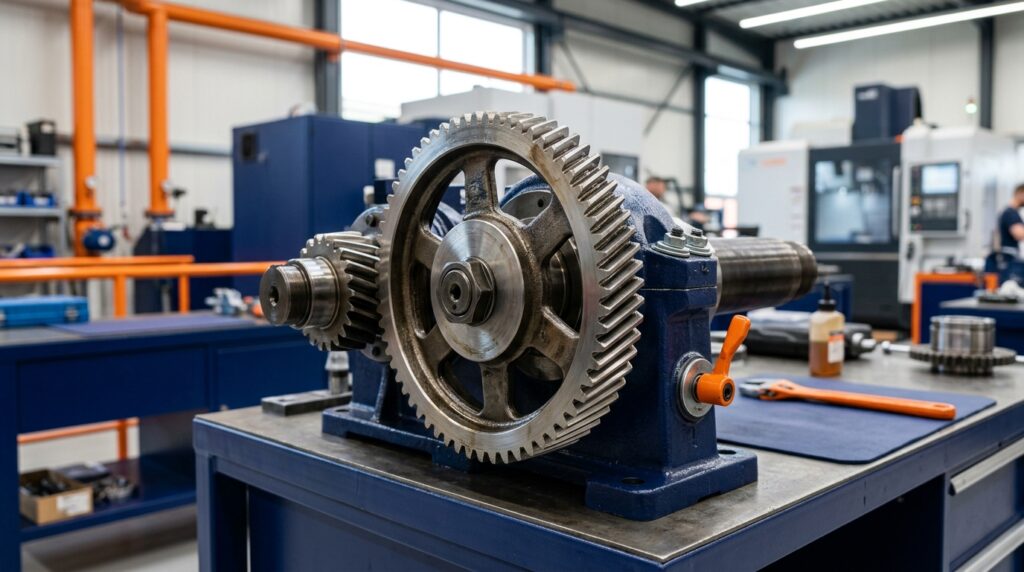
An ineffective corrective action is almost always linked to a poor initial diagnosis: misidentified cause, symptom/cause confusion, no overall view. As long as the root cause isn’t mastered, the breakdown will return.
Impact on performance: MTBF, MTTR and availability
An ineffective action causes recurring breakdowns, hence a falling MTBF. MTTR often increases (multiple trials), and since availability = MTBF / (MTBF + MTTR), overall performance collapses as soon as MTBF drops.
How to build an effective corrective action
- Start from a reliable diagnosis: 5 Whys, Ishikawa, fault tree, FMEA;
- Test the relevance: does it eliminate the cause? does it introduce a risk? is it reproducible?
- Involve the right skills: maintenance, production, methods, engineering;
- Validate over time: no recurrence, improved MTBF, fewer interventions;
- Capitalize systematically: knowledge base, CMMS update, field sharing.
The role of modern tools
Standard CMMS track interventions, but don’t always allow structuring root causes, linking cause → action → result or capitalizing. Approaches like that of MAINTEX structure the diagnosis, recommend suitable actions, measure their effectiveness and capitalize lasting solutions. You move from managing interventions to improving maintenance performance.
Diagnose better, avoid ineffective repairs and improve the reliability of your equipment.
Conclusion: repairing is no longer enough
Corrective action is the main lever to improve MTBF, reduce recurring breakdowns and stabilize production. High-performing organizations don’t just repair: they eliminate the causes. Moving from a fix-it culture to a lasting-correction culture means turning maintenance into a lever of industrial performance.