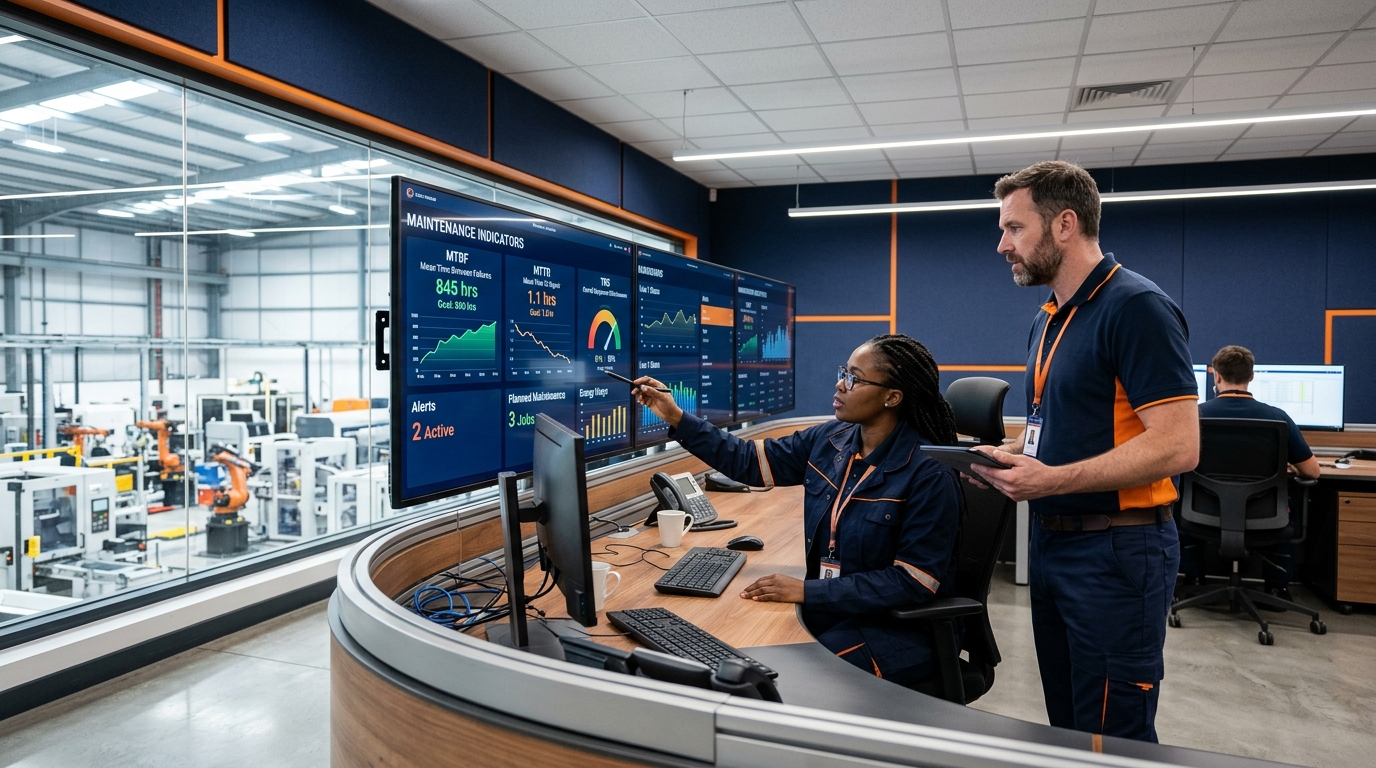
A maintenance team’s performance isn’t measured by the number of work orders, but by its ability to make equipment reliable and control costs. For that, one lever: steer by data. Here are the 7 essential maintenance KPIs (MTBF, MTTR, OEE…) to turn reactive maintenance into a data-driven function.
Why track maintenance KPIs?
Maintenance indicators turn a reactive activity into a data-driven function. By regularly tracking the right KPIs, a company can:
- reduce unplanned breakdowns;
- improve equipment availability;
- optimize maintenance resources;
- better plan interventions.
These indicators are central to continuous-improvement approaches and industrial standards.
1. MTBF: Mean Time Between Failures
The MTBF (Mean Time Between Failures) measures an asset’s reliability. The higher it is, the more reliable the asset.
2. MTTR: Mean Time To Repair
The MTTR (Mean Time To Repair) measures the time needed to bring an asset back into service after a failure. A low MTTR reflects teams that intervene fast and well.
3. OEE: overall performance
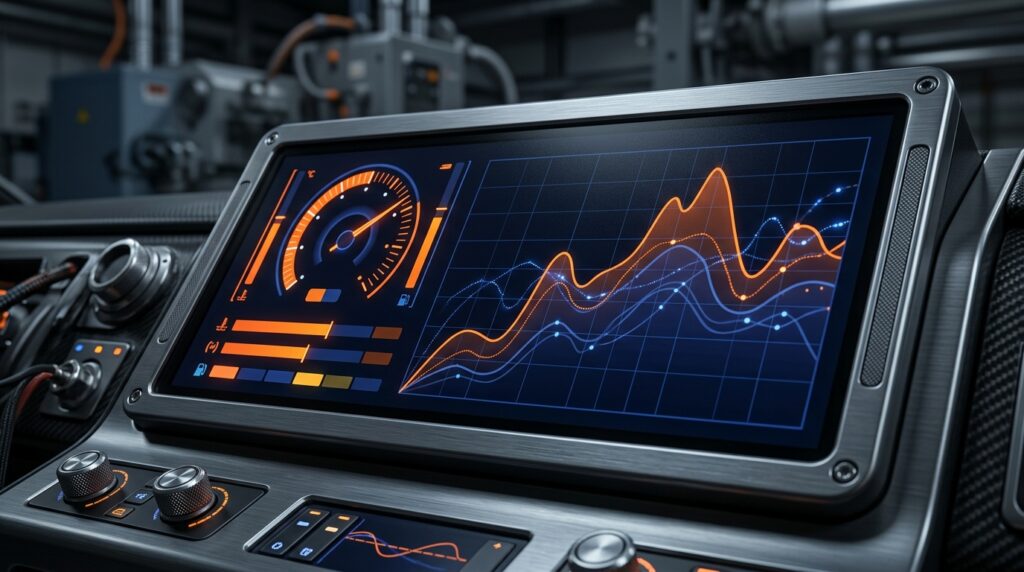
The OEE (Overall Equipment Effectiveness) combines three factors to measure an asset’s real performance.
4. Preventive maintenance compliance rate
This indicator measures adherence to the preventive maintenance plan. A high rate means plans are properly executed; a low rate reveals a lack of resources or planning to review.
5. Corrective maintenance rate
It measures the share of corrective interventions out of all interventions. A high rate indicates overly reactive maintenance: the goal is to shift toward more preventive.
6. Equipment availability
Availability measures an asset’s ability to operate when required. It directly links reliability (MTBF) and responsiveness (MTTR).
7. Maintenance cost per asset
This indicator tracks the spending tied to each asset (labor, spare parts, external interventions). It reveals the most expensive assets and the machines to replace.
Summary of the 7 KPIs
| KPI | What it measures | Formula | Target |
|---|---|---|---|
| MTBF | Reliability | Operation / no. failures | Maximize |
| MTTR | Repair responsiveness | Repair time / no. interventions | Minimize |
| OEE | Overall performance | Avail × Perf × Quality | Maximize |
| PM compliance | Plan adherence | Completed / planned | > 90% |
| Corrective rate | Share of reactive | Corrective / total | Minimize |
| Availability | Ability to operate | MTBF / (MTBF + MTTR) | Maximize |
| Cost / asset | Spend per machine | Sum of costs | Control |
How to track these KPIs effectively?
In many companies, these indicators are still calculated in Excel. This method quickly shows its limits:
- difficult data consolidation;
- no real-time visibility;
- high risk of errors.
That’s why more and more manufacturers rely on a CMMS (Computerized Maintenance Management System): automatic data collection, real-time KPI calculation, performance analysis per asset.
Why steer your KPIs with MAINTEX
MAINTEX is a mobile-first CMMS solution designed for industrial companies. The platform centralizes equipment, tracks interventions, analyzes MTBF / MTTR / availability, and visualizes performance in clear dashboards, for decisions based on reliable data.
In 30 minutes, discover how to centralize your data, analyze your performance and make your equipment reliable.
FAQ: maintenance KPIs
Conclusion
Maintenance KPIs are essential for steering the performance of industrial equipment. By regularly tracking indicators like MTBF, MTTR or OEE, companies improve their machines’ reliability and optimize their operations. CMMS solutions like MAINTEX now make it possible to centralize this data and gain a clear view of maintenance performance.