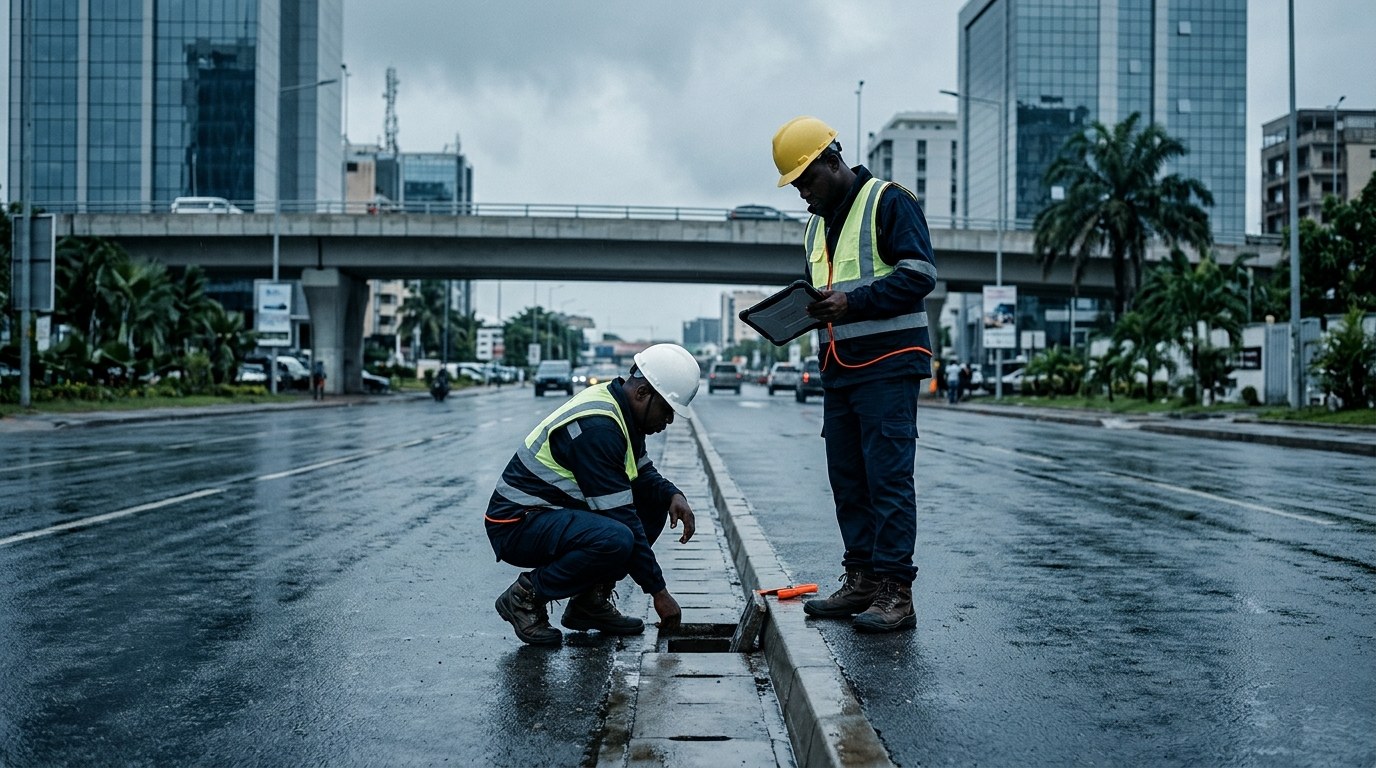
Heavy rain, floods, heat: climate puts roads and bridges to the test. The managers who cope best are not necessarily those with the biggest budget, but those who know where to act first.
What the World Bank says
In its publication on the climate resilience of African infrastructure, in the roads and bridges sector, the World Bank stresses that road assets are particularly vulnerable to climate stresses: rising temperatures, heavier rainfall, floods. Climate change, it writes, will require more maintenance and more frequent rehabilitation. It adds that adequate maintenance is the most critical and most effective way to reduce the impact of climate change on the road network.
It also notes that interruptions to the movement of people and goods are becoming more frequent, with direct consequences for economic productivity. And that more resilient roads often cost more to build, but that this extra cost is frequently more than offset by lower annual costs for maintenance, repair and rehabilitation.
Inspect to decide
Maintaining in the right place means knowing the condition of each section. A regular inspection, with an identical form for all staff, makes it possible to compare different situations. The points to record are simple: pavement condition, drainage, structures, erosion, water accumulation points. A geotagged photo taken from a phone, even offline, is worth more than a long written report prepared several days later.
Failure history as a compass
A road that gets damaged every rainy season in the same place reveals a problem that routine maintenance alone does not solve: undersized drainage, unstable soil, a poorly placed structure. Keeping a record of each degradation, with its date, its location and the repair carried out, turns these repetitions into signals. Without a history, you repair the same spot every year without ever understanding why.
Criticality to prioritise the works
Budgets never cover everything. Criticality helps to choose. A section is more critical when:
- there is no alternative route,
- it serves a hospital, a market, a port or a production area,
- it carries heavy traffic or the transport of sensitive goods,
- it is exposed to repeated hazards (flood, landslide, erosion).
Crossing the condition of the section with its criticality gives a priority list that can be defended before a committee or a lender.
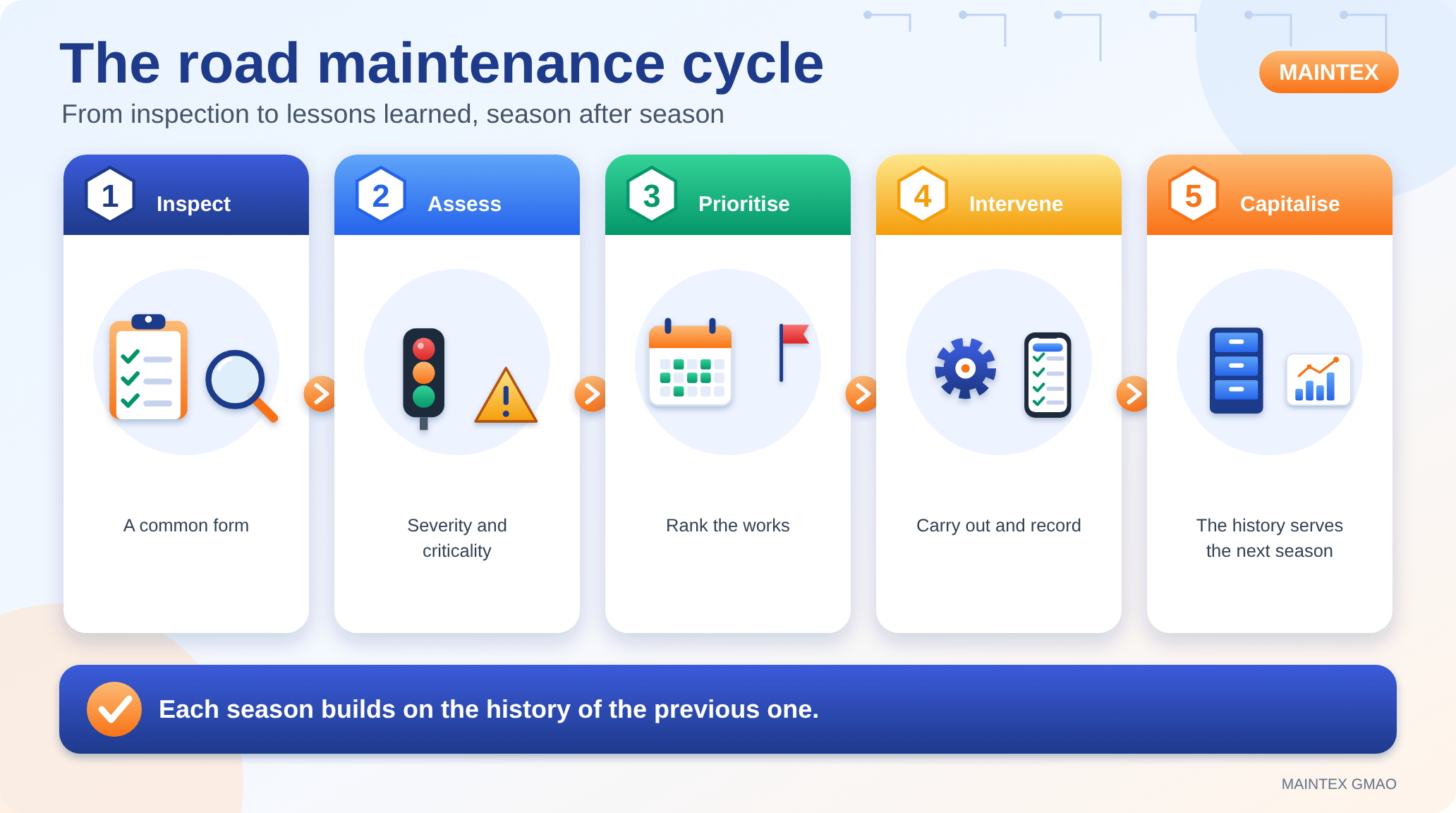
The intervention cycle
- Inspect: record the condition with a common form.
- Assess: score the severity and the criticality of the section.
- Prioritise: rank the interventions by condition and criticality.
- Intervene: carry out the works and record them.
- Capitalise: keep the history for the next season.
No single solution
The World Bank itself qualifies its statement: investing early in pavement improvements to account for rising temperatures is almost always justified, but for rainfall and floods, the answer is more nuanced, and general prescriptions should be avoided. In other words, the right trade-off depends on the site, its data and its history.
Where MAINTEX comes in
MAINTEX lets you list assets, enter inspections from the field with or without a connection, track the history of interventions and plan preventive maintenance according to criticality. It is designed for infrastructure managers, in Africa as in Europe, with multilingual support.

See how MAINTEX links inspections, failure history and asset criticality.