For years, Excel was the No. 1 tool for tracking industrial maintenance. Handy at first… but as soon as the machine fleet grows, it becomes a brake on your plant’s efficiency. Here are the 7 limits that slow down your teams, and the alternatives.
Why Excel is still used in maintenance
Excel remains popular for three reasons: it’s already present in the company (no investment), it’s flexible (everyone creates their own tables) and it’s simple at first. For a small fleet, it can be enough. But when the company grows, its limits quickly appear.
The 7 Excel limits that slow down your plant
1. Files become unmanageable
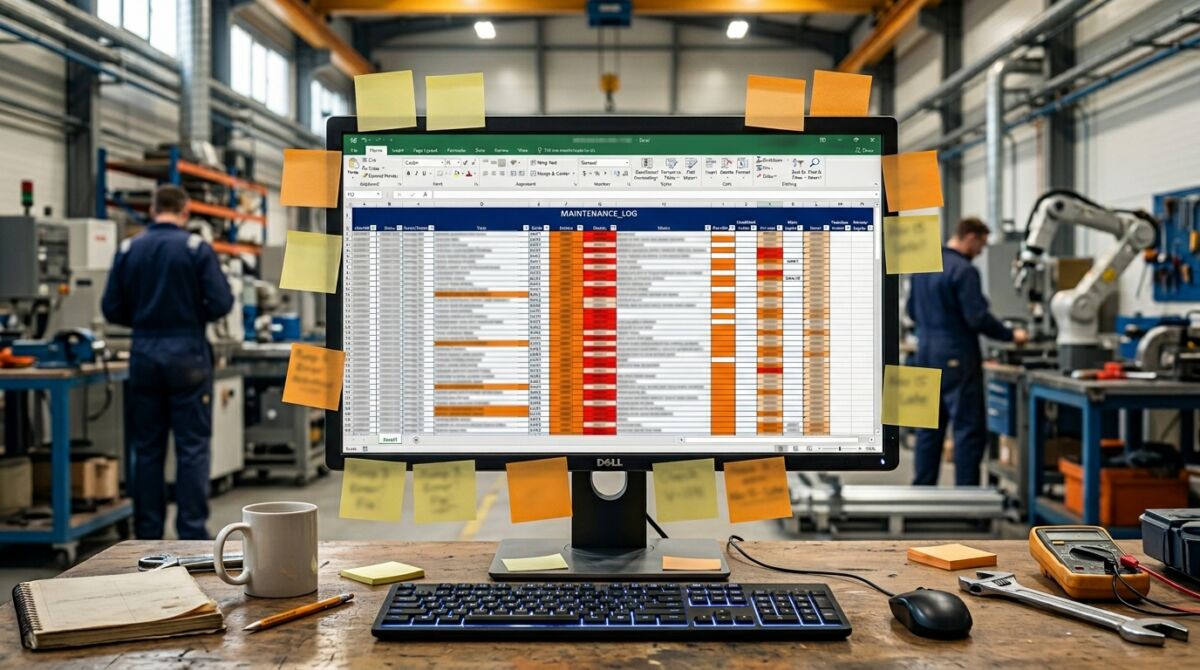
Equipment list, histories, maintenance plan, parts tracking… files multiply. The result: information hard to find, duplicates and inconsistencies between data.
2. Data is decentralized and scattered: risk of inconsistency
When several technicians work on the same equipment, collaboration becomes a headache: multiple versions of a file, unsynchronized data, lost updates.
3. No real-time tracking
Reports are filled in after the intervention: omissions, entry errors, and no immediate visibility on the real state of equipment.
4. Preventive planning is difficult
Checking dates, updating schedules, monitoring deadlines… everything is manual. Without automatic alerts, interventions fall through the cracks.
5. Data analysis is limited
Tracking indicators like MTBF, MTTR or the preventive completion rate requires heavy manual work as soon as volume increases.
6. Traceability is hard to guarantee
During an audit, providing the intervention history, the operations performed and the parts replaced can become a real obstacle course.
7. Excel holds back digitalization
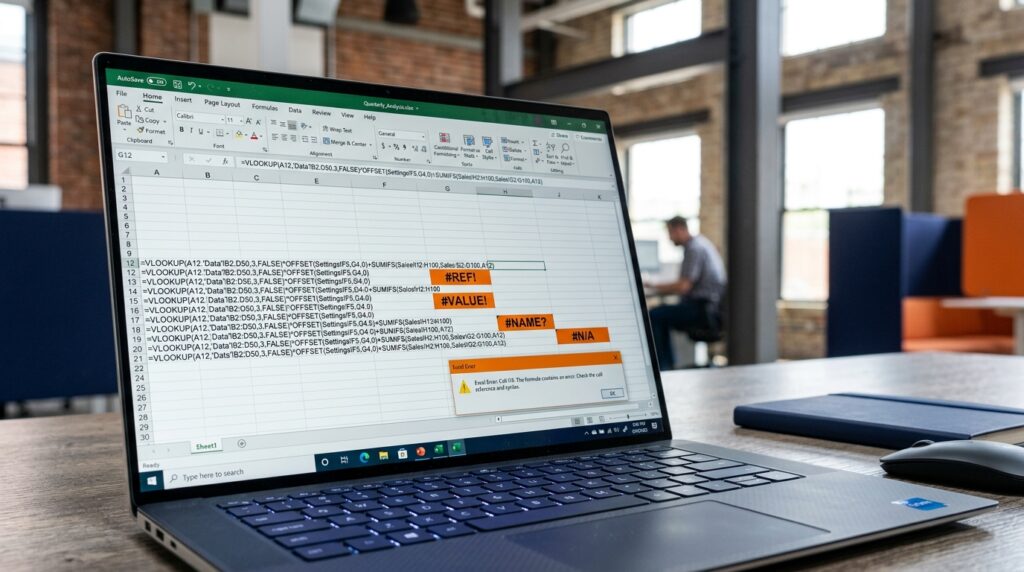
Mobile apps for technicians, IoT sensors, advanced analysis: Excel can’t leverage these modern technologies, which hampers maintenance improvement.
Why companies switch to a CMMS
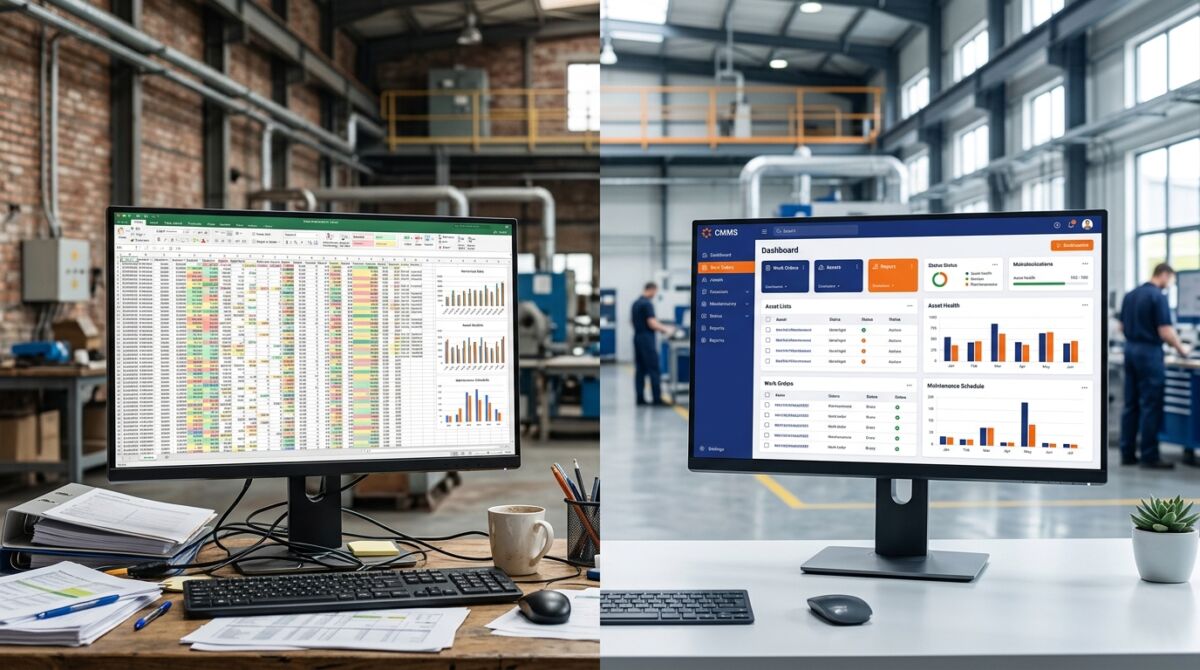
Faced with these limits, more and more manufacturers adopt a CMMS (Computerized Maintenance Management System). Unlike Excel, all the information is gathered in a single system accessible to the whole team. A CMMS lets you:
- centralize equipment and their histories;
- automatically plan preventive maintenance;
- track interventions in real time;
- analyze performance (MTBF, MTTR, availability).
Why many companies choose MAINTEX
MAINTEX is a CMMS designed to structure maintenance without excessive complexity: equipment centralization, automatic planning, intervention tracking and performance analysis. Managers finally have a clear view of their organization.
In 30 minutes, discover how MAINTEX structures your maintenance and makes your machine fleet reliable.
Conclusion
Excel is a good starting point, but when industrial activity grows, its limits quickly appear: lack of visibility, difficult collaboration, limited analysis. Moving from Excel to a CMMS is a key step in maintenance digitalization, and a direct lever for equipment reliability.